


1
/
of
3
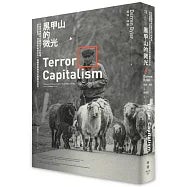
Glimmer of Hope from Black Mountain: Xinjiang Under China's Terror Capitalism – A Glimpse into Uyghur Suffering and Resistance Through Tech Surveillance, Youth Exile, and "Nail Households"
Glimmer of Hope from Black Mountain: Xinjiang Under China's Terror Capitalism – A Glimpse into Uyghur Suffering and Resistance Through Tech Surveillance, Youth Exile, and "Nail Households"
Darren Byler , Hwansheng Cheng Huan-Sheng Cheng 译
Regular price
$31.99 USD
Regular price
Sale price
$31.99 USD
Unit price
/
per
Low stock
Couldn't load pickup availability
ISBN
ISBN
9786263153318
share


书籍简介
Heijiashan, another Muslim community in Urumqi razed due to "poverty" and "backwardness"
Once, only here, were they free
Darren Byler, author of "Xinjiang Re-education Camps" and anthropologist, spent over 8 years
Documenting Uighur men under China's reign of terror in the 21st century
Their exile, dreams, and resistance in a city
Recommended by—
Eset Sulaiman │ Uyghur Literature PhD, independent scholar, former professor at Xinjiang University School of Humanities
Jiann-Yuh Kuo │ Associate Research Fellow, National Security Division, Institute for National Defense and Security Research, Taiwan
Abduweli Ayup │ Uyghur linguist and poet
A Po │ Media worker
Joshua L. Freeman │ Assistant Research Fellow, Institute of Modern History, Academia Sinica
"Telling their stories, letting people know how they knew they would be arrested, 'disappeared,'
Allows us to watch their social lives crumble while still trying to hold onto them."
Darren Byler, a renowned scholar of Xinjiang regional studies and technological surveillance, presents a macro and personal ethnography. On one hand, through the lens of global capitalism and colonialism, he explores how the authoritarian governance and large-scale surveillance system in Xinjiang borrowed from the development of the American tech industry and appropriated global anti-terrorism discourse to legitimize the political, social, economic, and cultural deprivation of Muslim ethnic groups. On the other hand, he delicately describes the fleeting freedom, friendships, and dreams of young Uyghur men who, under the reign of terror, escaped rural technological surveillance and re-education camps to Urumqi.
Since 2010, in addition to the large-scale development of technological surveillance and digital enclosures, Han Chinese migrants, encouraged by state policies to "Go West," have gradually achieved a "good life" with cars, homes, and children, protected by these policies. Over the past decade, the Beijing government has also utilized Han Chinese immigrants to embody the micropractices of a colonial system, showcasing "good qualities" in contrast to the "not Chinese enough" and "modern" traditional Muslim culture and life. In the name of the war on terror, young Uyghurs are forced to make a binary choice: either serve the state authorities as auxiliary police, re-education camp instructors, or intelligence workers under strict supervision by the national police, or be sent to camps or factory systems, becoming a part of the surveillance system.
However, amidst such an inescapable web of surveillance and deprivation, a few individuals have attempted to live lives beyond the "Chinese Dream." They are apprentices, salespersons, and advertising professionals who shave their beards and wear urban attire, striving to settle in the city; they are Han Chinese photographers who spent decades documenting Muslim communities in the suburbs; they are the last shepherds on Heijiashan in the urban outskirts; they are young Muslim men who strive to maintain Muslim religious, economic, and social life through friendships and online communities.
In Turkish teahouses, neighborhoods centered around mosques, or the homes of Uyghur friends, the author converses and reads with them, facing the pressure of arrest alongside them. Beyond the oppression, he attempts to construct a narrative where "life is not insignificant" by writing about their struggles, difficulties, and desires, leaving a final trace of their pursuit of limited autonomy before they are disappeared.
International Acclaim—
The Los Angeles Review of Books, The Times Literary Supplement, Canadian Literature Review
The Globe and Mail, Eurasia Geography and Economics (brief reviews)
Offers crucial insights into one of the most important and controversial issues in international human rights. Byler, based on an extensive database of firsthand research, delves into the persecution and cultural annihilation of the Uyghurs in great detail. It is an indispensable resource for research on human rights, surveillance, China, Muslims, Islamophobia, capitalism, and more.
— David Palumbo-Liu, Stanford University
A comprehensive interpretation of the deprivation suffered by the Uyghur people. Within an anthropological context filled with violence and terror, it achieves a balance between political passion and scholarly research, while also possessing important reflexivity. The Uyghurs have experienced so much, yet we know so little. This book is one of the few that can bring such a complex understanding to the situation in Xinjiang.
— Lisa Rofel, University of California, Santa Cruz
Darren Byler's ethnographic research is a valuable contribution. He offers a rare, micro, and grassroots perspective on Uyghur life over the past decade. His storytelling skillfully provides readers with deep insight into the inner lives of the characters and offers extraordinary insights into the Uyghur experience.
— Vanessa Frangville, China Quarterly
If the characteristic of settler colonialism is the dispossessed indigenous other, whose bodies are removed and replaced by a new settler society, then contemporary Xinjiang might be the unsettling frontier of twenty-first-century settler colonialism.
— Michael Clarke, Ethnic and Racial Studies
For several years, Darren Byler has tirelessly and profoundly described the process of Uyghur societal dispossession. This book helps us further understand contemporary settler colonialism, the lives of Uyghur exiles, and the ongoing crisis in the Uyghur homeland. With a touching pen, Byler convincingly reveals that a regime cannot prevent a marginalized society from creating new forms of social meaning.
— Joshua L. Freeman, Journal of Asian Studies
While many academic discussions on "Uyghur dispossession" often revolve around its systemic elements, Byler calls on us to examine its devastating impact on a micro, individual level. Thus, the strength of his theoretical and methodological framework is clear: through detailed ethnographic research, he dissects the dehumanization caused by terror capitalism, urging readers to remember that resistance begins with reasserting the humanity of the oppressed.
— David R. Stroup, PoLAR
Once, only here, were they free
Darren Byler, author of "Xinjiang Re-education Camps" and anthropologist, spent over 8 years
Documenting Uighur men under China's reign of terror in the 21st century
Their exile, dreams, and resistance in a city
Recommended by—
Eset Sulaiman │ Uyghur Literature PhD, independent scholar, former professor at Xinjiang University School of Humanities
Jiann-Yuh Kuo │ Associate Research Fellow, National Security Division, Institute for National Defense and Security Research, Taiwan
Abduweli Ayup │ Uyghur linguist and poet
A Po │ Media worker
Joshua L. Freeman │ Assistant Research Fellow, Institute of Modern History, Academia Sinica
"Telling their stories, letting people know how they knew they would be arrested, 'disappeared,'
Allows us to watch their social lives crumble while still trying to hold onto them."
Darren Byler, a renowned scholar of Xinjiang regional studies and technological surveillance, presents a macro and personal ethnography. On one hand, through the lens of global capitalism and colonialism, he explores how the authoritarian governance and large-scale surveillance system in Xinjiang borrowed from the development of the American tech industry and appropriated global anti-terrorism discourse to legitimize the political, social, economic, and cultural deprivation of Muslim ethnic groups. On the other hand, he delicately describes the fleeting freedom, friendships, and dreams of young Uyghur men who, under the reign of terror, escaped rural technological surveillance and re-education camps to Urumqi.
Since 2010, in addition to the large-scale development of technological surveillance and digital enclosures, Han Chinese migrants, encouraged by state policies to "Go West," have gradually achieved a "good life" with cars, homes, and children, protected by these policies. Over the past decade, the Beijing government has also utilized Han Chinese immigrants to embody the micropractices of a colonial system, showcasing "good qualities" in contrast to the "not Chinese enough" and "modern" traditional Muslim culture and life. In the name of the war on terror, young Uyghurs are forced to make a binary choice: either serve the state authorities as auxiliary police, re-education camp instructors, or intelligence workers under strict supervision by the national police, or be sent to camps or factory systems, becoming a part of the surveillance system.
However, amidst such an inescapable web of surveillance and deprivation, a few individuals have attempted to live lives beyond the "Chinese Dream." They are apprentices, salespersons, and advertising professionals who shave their beards and wear urban attire, striving to settle in the city; they are Han Chinese photographers who spent decades documenting Muslim communities in the suburbs; they are the last shepherds on Heijiashan in the urban outskirts; they are young Muslim men who strive to maintain Muslim religious, economic, and social life through friendships and online communities.
In Turkish teahouses, neighborhoods centered around mosques, or the homes of Uyghur friends, the author converses and reads with them, facing the pressure of arrest alongside them. Beyond the oppression, he attempts to construct a narrative where "life is not insignificant" by writing about their struggles, difficulties, and desires, leaving a final trace of their pursuit of limited autonomy before they are disappeared.
International Acclaim—
The Los Angeles Review of Books, The Times Literary Supplement, Canadian Literature Review
The Globe and Mail, Eurasia Geography and Economics (brief reviews)
Offers crucial insights into one of the most important and controversial issues in international human rights. Byler, based on an extensive database of firsthand research, delves into the persecution and cultural annihilation of the Uyghurs in great detail. It is an indispensable resource for research on human rights, surveillance, China, Muslims, Islamophobia, capitalism, and more.
— David Palumbo-Liu, Stanford University
A comprehensive interpretation of the deprivation suffered by the Uyghur people. Within an anthropological context filled with violence and terror, it achieves a balance between political passion and scholarly research, while also possessing important reflexivity. The Uyghurs have experienced so much, yet we know so little. This book is one of the few that can bring such a complex understanding to the situation in Xinjiang.
— Lisa Rofel, University of California, Santa Cruz
Darren Byler's ethnographic research is a valuable contribution. He offers a rare, micro, and grassroots perspective on Uyghur life over the past decade. His storytelling skillfully provides readers with deep insight into the inner lives of the characters and offers extraordinary insights into the Uyghur experience.
— Vanessa Frangville, China Quarterly
If the characteristic of settler colonialism is the dispossessed indigenous other, whose bodies are removed and replaced by a new settler society, then contemporary Xinjiang might be the unsettling frontier of twenty-first-century settler colonialism.
— Michael Clarke, Ethnic and Racial Studies
For several years, Darren Byler has tirelessly and profoundly described the process of Uyghur societal dispossession. This book helps us further understand contemporary settler colonialism, the lives of Uyghur exiles, and the ongoing crisis in the Uyghur homeland. With a touching pen, Byler convincingly reveals that a regime cannot prevent a marginalized society from creating new forms of social meaning.
— Joshua L. Freeman, Journal of Asian Studies
While many academic discussions on "Uyghur dispossession" often revolve around its systemic elements, Byler calls on us to examine its devastating impact on a micro, individual level. Thus, the strength of his theoretical and methodological framework is clear: through detailed ethnographic research, he dissects the dehumanization caused by terror capitalism, urging readers to remember that resistance begins with reasserting the humanity of the oppressed.
— David R. Stroup, PoLAR
出版日期/Publication Date:
出版社/Publisher:臉譜出版, 城邦文化事業股份有限公司
出品方/Imprint:
页数/Page: 416