

1
/
of
2
Auspicious sign
Auspicious sign
Zhang Xiangrong
Regular price
$41.99 USD
Regular price
Sale price
$41.99 USD
Unit price
/
per
Low stock
Couldn't load pickup availability
ISBN
ISBN
9787208172036
share

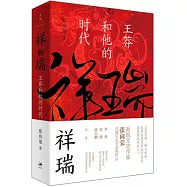
书籍简介
★ Was Wang Mang, who traced his lineage back to Yao and Shun, and ascended to the throne through abdication, a divinely chosen sage-ruler or a usurper of the Han dynasty?
★ The debut non-fiction historical work by rising cultural and historical writer and internet-famous book reviewer, Zhang Xiangrong.
★ Highly recommended by Luo Xin, Liu Bo, and Lu Dapeng.
★ Setting aside preconceived notions, this book clarifies the true nature of Wang Mang and reveals the truth of imperial power during the Han dynasties.
With rich details, it recreates the ups and downs of his political career and examines the gains and losses of the Confucian mission.
~~~~~~~~~~~~~~~~~~~~~~~~~~~~~~~~~~~~~~~~~~~~~~~~~~~~~~~~~~~~~~
★ Traditional historiography has denigrated the Xin dynasty as an illegitimate reign, painting this crucial moment at the end of classical antiquity as bizarre and absurd. Zhang Xiangrong, through a deeply observed and detailed account, allows readers to see a transitional era full of vitality and possibilities.
——Luo Xin
★ This is truly well-written. The first chapter, a brief overview of Han history, synthesizes various cutting-edge findings and is incredibly informative. The section specifically on Wang Mang, where existing research is relatively weak and there are fewer established works to draw upon, proceeds from basic historical materials in a leisurely yet meticulous manner, filled with both common sense and profound insights.
——Liu Bo
★ Dr. Zhang Xiangrong's "Auspicious Omens" is not merely a biography of Wang Mang; it also clearly and illuminatingly untangles the "founding" and "establishment" of the Western Han dynasty, as well as how Confucianism became the imperial ideology. This book is supported by a deep academic foundation, is appropriately accessible in its writing style, features ingenious structural design, and is humorous and witty, often offering incisive and thought-provoking comments. Readers interested in Wang Mang, Western Han history, and Confucianism should all consider reading this book. I look forward to reading more such history books on Chinese topics aimed at "well-educated, non-specialist" readers.
——Lu Dapeng
~~~~~~~~~~~~~~~~~~~~~~~~~~~~~~~~~~~~~~~~~~~~~~~~~~~~~~~~~~~~~~
★ In the spring of the first month of Yuanshi元年 (1 AD), the Han court welcomed an auspicious omen unseen for a thousand years. The "Yueshang clan," barbarians from a distant land, came to Chang'an to pay tribute, presenting one white pheasant and two black pheasants. The appearance of a white pheasant signified that a king whose virtue spread to all corners of the earth had appeared. Emperor Ping of Han, who had just ascended the throne, was only 9 years old. The last time the Yueshang clan presented pheasants to the Central Plains was during the reign of King Cheng of Zhou, where they met the Duke of Zhou, who assisted the young ruler. — Could the so-called "king" be Wang Mang, the Grand Marshal who had just stabilized the Western Han political situation? This was most likely a farce orchestrated by Wang Mang himself, but how did the common people view this meritorious powerful relative and official, who was comparable to the Duke of Zhou? Was it with surprise, shock, or did they feel it was icing on the cake?
★ Unlike the "one family, one surname" dynasties that became fixed in later periods, the Western Han in Chinese history was different. It was not only a dynasty but also a new stage where Chinese Confucian culture was first codified into law. At the same time, the Western Han was an era deeply superstitious about the interaction between heaven and man, and its less than two-hundred-year history was filled with chenwei prophecies. Starting from the reign of Emperor Wu of Han, natural disasters and auspicious omens, as well as divine warnings, became closely intertwined with real-world political movements.
★ Born at the end of the Western Han dynasty, Wang Mang lost his father in childhood and did not receive the preferential treatment typically accorded to members of an imperial consort clan. He rose from a mere Confucian scholar to become a promising talent on whom the family placed high hopes, due to his meticulous way of handling affairs and dealing with people. He returned to the court by leveraging the concept of "auspicious omens"; he then climbed steadily amidst public acclamation, eventually establishing the Xin dynasty legitimately. How, then, did he go from being a "philosopher king" whose "heart was aligned with all under heaven" to a usurper of Han "abandoned by both heaven and man" in just fifteen years?
★ Facing an increasingly severe crisis of political legitimacy, Wang Mang, a practitioner of Confucian theory, diligently served the state, establishing the Biyong (royal academy), formulating rituals and music, and restoring the well-field system, earning the recognition of other Confucian scholars of his time. So what was Wang Mang's true motivation for claiming the imperial title? Was Wang Mang an evil and lawless usurper, or a reformist advocating a return to ancient ways? Was he the one who decided to establish the state based on Confucianism, or a masterful political performer?
★ This book intercepts the historical period from Emperor Xuan of Han to the Xin dynasty, cutting in from the perspective of "auspicious omens" to analyze the people and events related to Wang Mang's individual life, family, and regime. It recreates the power struggles of Empress Dowager Wang Zhengjun, the Wang imperial consort clan, the Liu imperial family, Confucian classicists, and bureaucratic scholar-officials on the political stage of the late Western Han, thereby re-examining Wang Mang at the center of the vortex to glimpse his true self and the reality of his era.
★ The debut non-fiction historical work by rising cultural and historical writer and internet-famous book reviewer, Zhang Xiangrong.
★ Highly recommended by Luo Xin, Liu Bo, and Lu Dapeng.
★ Setting aside preconceived notions, this book clarifies the true nature of Wang Mang and reveals the truth of imperial power during the Han dynasties.
With rich details, it recreates the ups and downs of his political career and examines the gains and losses of the Confucian mission.
~~~~~~~~~~~~~~~~~~~~~~~~~~~~~~~~~~~~~~~~~~~~~~~~~~~~~~~~~~~~~~
★ Traditional historiography has denigrated the Xin dynasty as an illegitimate reign, painting this crucial moment at the end of classical antiquity as bizarre and absurd. Zhang Xiangrong, through a deeply observed and detailed account, allows readers to see a transitional era full of vitality and possibilities.
——Luo Xin
★ This is truly well-written. The first chapter, a brief overview of Han history, synthesizes various cutting-edge findings and is incredibly informative. The section specifically on Wang Mang, where existing research is relatively weak and there are fewer established works to draw upon, proceeds from basic historical materials in a leisurely yet meticulous manner, filled with both common sense and profound insights.
——Liu Bo
★ Dr. Zhang Xiangrong's "Auspicious Omens" is not merely a biography of Wang Mang; it also clearly and illuminatingly untangles the "founding" and "establishment" of the Western Han dynasty, as well as how Confucianism became the imperial ideology. This book is supported by a deep academic foundation, is appropriately accessible in its writing style, features ingenious structural design, and is humorous and witty, often offering incisive and thought-provoking comments. Readers interested in Wang Mang, Western Han history, and Confucianism should all consider reading this book. I look forward to reading more such history books on Chinese topics aimed at "well-educated, non-specialist" readers.
——Lu Dapeng
~~~~~~~~~~~~~~~~~~~~~~~~~~~~~~~~~~~~~~~~~~~~~~~~~~~~~~~~~~~~~~
★ In the spring of the first month of Yuanshi元年 (1 AD), the Han court welcomed an auspicious omen unseen for a thousand years. The "Yueshang clan," barbarians from a distant land, came to Chang'an to pay tribute, presenting one white pheasant and two black pheasants. The appearance of a white pheasant signified that a king whose virtue spread to all corners of the earth had appeared. Emperor Ping of Han, who had just ascended the throne, was only 9 years old. The last time the Yueshang clan presented pheasants to the Central Plains was during the reign of King Cheng of Zhou, where they met the Duke of Zhou, who assisted the young ruler. — Could the so-called "king" be Wang Mang, the Grand Marshal who had just stabilized the Western Han political situation? This was most likely a farce orchestrated by Wang Mang himself, but how did the common people view this meritorious powerful relative and official, who was comparable to the Duke of Zhou? Was it with surprise, shock, or did they feel it was icing on the cake?
★ Unlike the "one family, one surname" dynasties that became fixed in later periods, the Western Han in Chinese history was different. It was not only a dynasty but also a new stage where Chinese Confucian culture was first codified into law. At the same time, the Western Han was an era deeply superstitious about the interaction between heaven and man, and its less than two-hundred-year history was filled with chenwei prophecies. Starting from the reign of Emperor Wu of Han, natural disasters and auspicious omens, as well as divine warnings, became closely intertwined with real-world political movements.
★ Born at the end of the Western Han dynasty, Wang Mang lost his father in childhood and did not receive the preferential treatment typically accorded to members of an imperial consort clan. He rose from a mere Confucian scholar to become a promising talent on whom the family placed high hopes, due to his meticulous way of handling affairs and dealing with people. He returned to the court by leveraging the concept of "auspicious omens"; he then climbed steadily amidst public acclamation, eventually establishing the Xin dynasty legitimately. How, then, did he go from being a "philosopher king" whose "heart was aligned with all under heaven" to a usurper of Han "abandoned by both heaven and man" in just fifteen years?
★ Facing an increasingly severe crisis of political legitimacy, Wang Mang, a practitioner of Confucian theory, diligently served the state, establishing the Biyong (royal academy), formulating rituals and music, and restoring the well-field system, earning the recognition of other Confucian scholars of his time. So what was Wang Mang's true motivation for claiming the imperial title? Was Wang Mang an evil and lawless usurper, or a reformist advocating a return to ancient ways? Was he the one who decided to establish the state based on Confucianism, or a masterful political performer?
★ This book intercepts the historical period from Emperor Xuan of Han to the Xin dynasty, cutting in from the perspective of "auspicious omens" to analyze the people and events related to Wang Mang's individual life, family, and regime. It recreates the power struggles of Empress Dowager Wang Zhengjun, the Wang imperial consort clan, the Liu imperial family, Confucian classicists, and bureaucratic scholar-officials on the political stage of the late Western Han, thereby re-examining Wang Mang at the center of the vortex to glimpse his true self and the reality of his era.
出版日期/Publication Date:
出版社/Publisher:上海人民出版社
出品方/Imprint:Canjijia
页数/Page: 640