
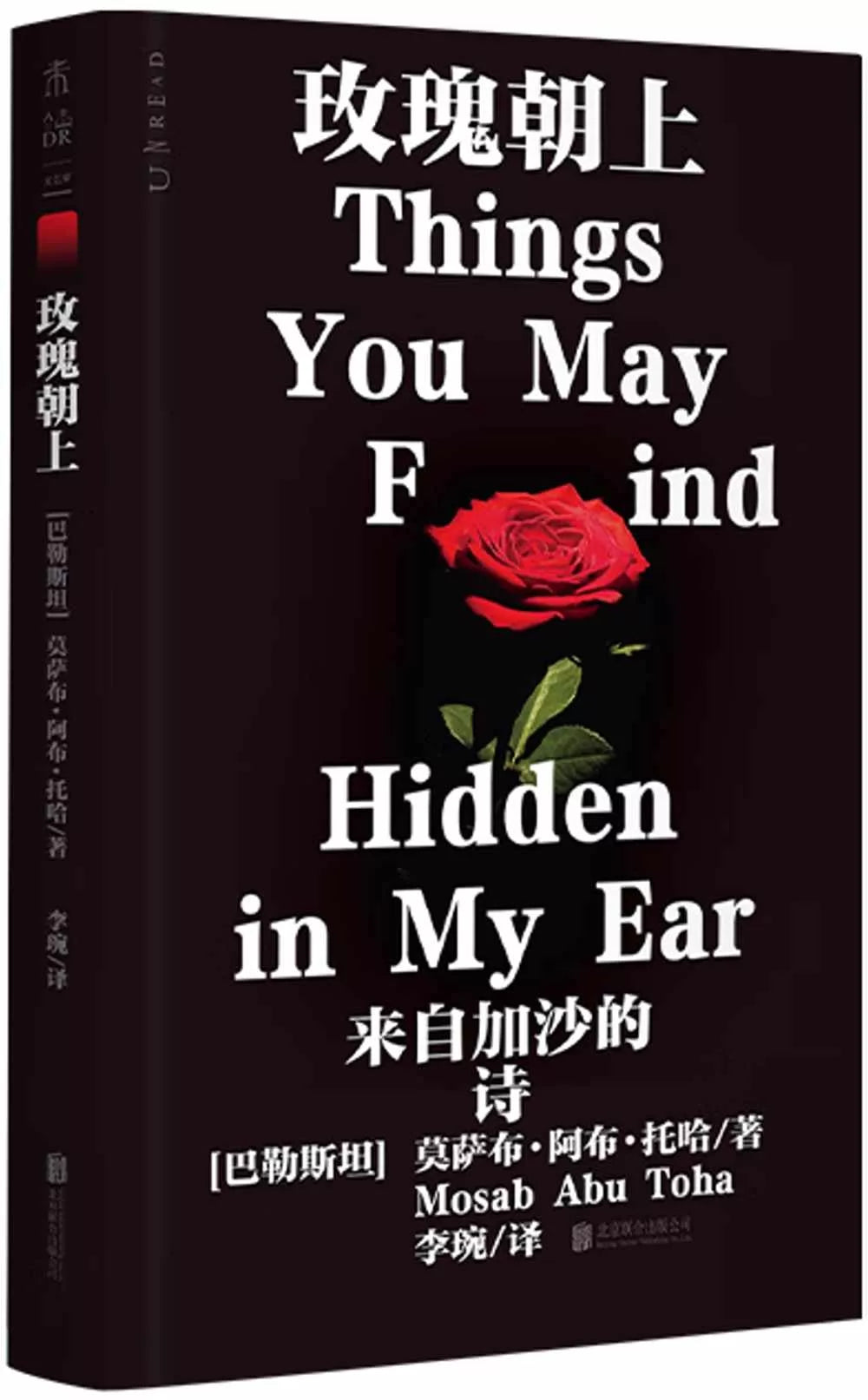
Roses facing upwards
Roses facing upwards
[Palestine] Mosab Abu Toha Li Wan 译
Out of stock
Couldn't load pickup availability
ISBN
ISBN
share
书籍简介
Works by a post-90s Palestinian young poet and 2025 Pulitzer Prize for Criticism winner,
The voice of Gaza, intertwined with cruelty and resilience.
A rose standing tall amidst the ruins, it is poetry, it is life.
🌹🌹🌹🌹🌹🌹🌹🌹
Amazon rating 4.8, Goodreads rating 4.75
Winner of the Palestine Book Award, the American Book Award, and the Walcott Poetry Prize
Finalist for the National Book Critics Circle Award for Poetry
Recommended by numerous celebrities, praised by media, and overwhelmingly positive reader reviews
——————
◎ Content Introduction
"Don't be surprised when you see
A rose in the ruins of a home
Standing tall:
This is how we survive."
This collection of poems directly stems from the poet's experiences of growing up and living in Gaza under a long-term blockade and frequent attacks. As a former child, now a father, and a survivor of multiple military assaults, he has witnessed the cruel cycle of destruction. But besides shells and drones, there are also the scent of tea, blooming roses, and sea views at sunset. Children are born, families continue traditions, students go to university, libraries rise from the rubble... Palestinians continue their lives, creating beauty, and finding new ways to survive.
At the beginning of this book, the poet sketches Palestinian civilian life in "A Palestinian Dictionary," showcasing the collective memory of the Palestinian people. In "Author Interview," he discusses his own experiences in Gaza, his family origins, and how he embarked on the path of poetry. Li Wan, a young poet and translator of similar age to the author, wrote an emotional afterword for this book, further introducing and explaining its significance.
————————
◎ Editor's Recommendation
🌹🌹Works by a post-90s Palestinian prodigy poet, a brilliant rose born amidst war and ruins, using poetry to open up imagination about Palestine, to see Gaza, to see life.
Is there poetry in war-torn Gaza? What does poetry born from war look like today? Toha's poems come from Gaza, where war is daily and death is a constant shadow, yet they blossom into moving flowers of life in this desolate land, urging us to see Palestine – especially now.
🌹🌹A quick sketch of the Palestinian landscape and the lives of ordinary people, presenting an unknown "other side of Gaza," where cruelty and hope intertwine, and life grows in desperation, with irreplaceable documentary significance.
Even if they cannot return, those forced to leave their homes still carry the keys to them; small children cannot distinguish between bomb smoke and clouds – in Gaza, even nature is confusing; but oranges, lemons, and strawberries still grow amidst the war, as do the resilient Palestinians.
Toha, with a young heart, traces the national memory of Palestine, gently touching its collective trauma, and also writes about an unknown side of Palestine – about love, hope, vibrant and resilient vitality, those "things that make life worth living."
🌹🌹Superb poetic artistry, inspiring poetic philosophy, a collection that will break your heart again and again, with precise, simple, and natural language, telling how poetry reconnects us to the world and common humanity.
In Toha's view, poetry does not necessarily have to be born in poetic environments, and it is never an escape. Poetry enables him to imagine, giving him wings to leave Gaza; it also leads him back to a richer reality, making him focus on the beautiful things overlooked due to daily fear, returning to the world and common humanity – we live on the same planet as Wordsworth! His poetic writing embodies his understanding of the essence of poetry: simple, clear, and deeply moving.
🌹🌹Edward Said, Mahmoud Darwish, Audre Lorde, Chomsky, Adorno... Toha converses with a host of intellectuals in his poems, resonating with their self-life experiences, or commemorating, or paying tribute, touching and connecting their spiritual textures.
————————————
◎ Celebrity Recommendations
He transformed his breath into resilient poetry, insisting that poetry itself be worthy of Palestine's lament.
——Kanishka Lublin (Walcott Poetry Prize judge)
Full of wisdom and artful lyricism, merging poetry's two great promises – wonder and testament – into a crystalline focus.
——Ocean Vuong, author of *On Earth We're Briefly Gorgeous*
Echoes the Polish poet Miłosz and the Indian poet Kabir. These poems are like flowers growing from bomb craters, and Abu Toha is a surprising and admirable genius.
——Mary Karr (American poet, writer)
A young poet from Gaza with astonishing talent... His poems break my heart and awaken it at the same time. I feel like my life had been waiting to read such works.
——Naomi Shihab Nye (Arab-American poet)
A poet who can concisely articulate complex things: "In Gaza, some of us can't even fully die." And, "This is how we survive." It's remarkable. This is poetry of the highest order.
——Kaveh Akbar (Iranian-American poet)
◎ Media Acclaim
It is a book steeped in death, yet life is depicted in every corner with an almost unbearable intensity.
——*New York Journal of Books*
“Abu Toha’s debut, written in his native Gaza, contrasts scenes of political violence with those of natural beauty.”
—— *The New York Times*
“Like the poets he admires, Abu Toha strives to find beauty around him, no matter how fleeting, and he takes readers on a philosophical exploration of his reality. These poems delve not only into the physical experience of conflict but also what lies beyond it. Due to generations of conflict, he reflects not only on the lives lost in Gaza but also on the experiences lost.”
——*World Literature Today*
◎ Overwhelmingly Positive Reader Reviews
If you've never felt sympathy for the people of Gaza, this collection will break your heart; if you have indeed been heartbroken for the people of Gaza, this collection will tear your heart apart page by page again.
(Amazon reviewer)
Reading these poems amidst all the videos and photos from Gaza gave me a sense of déjà vu... Toha's writing cuts to the core of the issue, echoing the pain and cries of Palestinians today. I highly recommend this book, especially now.
(Goodreads reviewer)
Toha's poems follow in the footsteps of his predecessors – like Mahmoud Darwish and Said... when he speaks for himself, he speaks for us, for others, for those who belong to the in-between.
(Goodreads reviewer)
This is precisely the feeling this collection conveys: a brilliant rose rising in violence, reminding us to listen, not to turn away, to cherish life.
(Goodreads reviewer)
出版日期/Publication Date:
出版社/Publisher:北京联合出版公司
出品方/Imprint:Unread, Unread·Artist
页数/Page: 192