
1
/
of
1
The Eight Principles of Yong
The Eight Principles of Yong
Zhou Ruchang
Regular price
$43.99 USD
Regular price
Sale price
$43.99 USD
Unit price
/
per
Out of stock
Couldn't load pickup availability
ISBN
ISBN
9787559843289
share
书籍简介
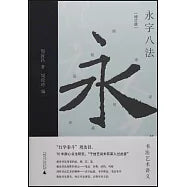
* Zhou Ruchang, a titan in "Redology," summarizes his 70 years of calligraphy research experience in this textbook on the art of calligraphy for everyone.
* The "Eight Principles of Yong" (Yongzi Bafa) are fundamental for learning calligraphy, a required course for understanding that "writing" has "rules."
* It points out the strengths and weaknesses of calligraphers, corrects historical errors in calligraphy, and forms a unique perspective. It directly addresses issues in learning calligraphy, eloquently narrating the beauty of our Chinese characters.
* 20th-anniversary hardcover commemorative edition, newly revised and expanded, with an exclusive collection of rubbings and calligraphy by the author.
***
[Content Introduction]
"I've put far more effort into 'calligraphy studies' than into 'Redology'." – Zhou Ruchang
Learning calligraphy in his youth, writing during the Anti-Japanese War, and composing books during the Tangshan earthquake, Zhou Ruchang's academic career was interwoven with the study and research of calligraphy. "The Eight Principles of Yong" serves as a culmination of Zhou Ruchang's lifelong calligraphic creations and research, practically answering questions encountered in learning calligraphy: Should one choose wolf hair or goat hair brushes? Should beginners start with seal or clerical script, or with regular script? Should one learn from steles or copybooks? Is a central brush stroke always necessary? How exactly does one "conceal the brush tip"? What do "cone drawing in sand" and "leaks in the roof" refer to? Why was the character "Yong" specifically chosen to establish the "Eight Principles"? Zhou Ruchang not only patiently responds to specific questions but also expands upon them, broadly covering key issues in calligraphic creation such as brushwork, understanding momentum, structure, and style, as well as theoretical topics like the origin of Chinese characters and calligraphic aesthetics, all eloquently explained in exquisite language, ensuring everyone who reads it finds inspiration.
Learning calligraphy can broadly be divided into three aspects – brushwork, structure, and style, with brushwork being key. One could even say that learning calligraphy is learning brushwork – the method of using the brush. The "Eight Principles of Yong" is an ancient summary of the eight basic brushstrokes of regular script, using the character "Yong" as an example. It can be considered a fundamental rule for learning calligraphy, essential basic training, and a required course for understanding that "writing" has "rules." This book uses the "Eight Principles of Yong" as its starting point, providing a detailed interpretation of calligraphy learning methods, calligraphic theory, and calligraphic aesthetics.
"The Eight Principles of Yong" is divided into three parts: upper, middle, and lower. The upper part, "Questions and Answers on Calligraphic Art," answers common questions encountered in learning calligraphy in a Q&A format, elucidating the basic connotations of the "Eight Principles of Yong" and their application in writing, serving as a "Q&A and problem-solving" section. If the upper part is an "introduction," then the middle part, "The Calligraphy Bible," is an "advancement" – tracing the origins of calligraphy and analyzing several key terms in calligraphic aesthetics, such as "stability," "vigor and danger," "clarity and sharpness," "charm and grace," etc., explaining the history and aesthetics of calligraphic art from a broader perspective. The lower part, "The Mysteries of Calligraphy," delves even deeper into the "arcana of calligraphy," specifically discussing calligraphic brush methods, the connotation of "charm and grace," the origin of Chinese calligraphic "writing studies" (yù xué), Shitao's "one stroke" theory, and the spirit of Chinese painting and calligraphy. In the appendix of the book, we can see Zhou Ruchang's textual research on the date of Ouyang Xun's "Stele of Mr. Huangfu," his interpretation of Sun Guoting's "Treatise on Calligraphy," and his correspondence with Yuan Dianyong discussing calligraphy. Additionally, beyond the main body of the book, there are reproductions of some calligraphic copybooks (which Zhou Ruchang called "broken rubbings") that Zhou Ruchang had collected throughout his life, as well as a hand-copied scroll of the "Preface to the Orchid Pavilion Gathering" by Zhou Ruchang (with colophons by Qi Gong, Xu Bangda, and Wang Xuezhong). The three parts progressively deepen, with the appendix and "broken rubbings" serving as supplements, making "The Eight Principles of Yong" a comprehensive work on learning calligraphy.
* The "Eight Principles of Yong" (Yongzi Bafa) are fundamental for learning calligraphy, a required course for understanding that "writing" has "rules."
* It points out the strengths and weaknesses of calligraphers, corrects historical errors in calligraphy, and forms a unique perspective. It directly addresses issues in learning calligraphy, eloquently narrating the beauty of our Chinese characters.
* 20th-anniversary hardcover commemorative edition, newly revised and expanded, with an exclusive collection of rubbings and calligraphy by the author.
***
[Content Introduction]
"I've put far more effort into 'calligraphy studies' than into 'Redology'." – Zhou Ruchang
Learning calligraphy in his youth, writing during the Anti-Japanese War, and composing books during the Tangshan earthquake, Zhou Ruchang's academic career was interwoven with the study and research of calligraphy. "The Eight Principles of Yong" serves as a culmination of Zhou Ruchang's lifelong calligraphic creations and research, practically answering questions encountered in learning calligraphy: Should one choose wolf hair or goat hair brushes? Should beginners start with seal or clerical script, or with regular script? Should one learn from steles or copybooks? Is a central brush stroke always necessary? How exactly does one "conceal the brush tip"? What do "cone drawing in sand" and "leaks in the roof" refer to? Why was the character "Yong" specifically chosen to establish the "Eight Principles"? Zhou Ruchang not only patiently responds to specific questions but also expands upon them, broadly covering key issues in calligraphic creation such as brushwork, understanding momentum, structure, and style, as well as theoretical topics like the origin of Chinese characters and calligraphic aesthetics, all eloquently explained in exquisite language, ensuring everyone who reads it finds inspiration.
Learning calligraphy can broadly be divided into three aspects – brushwork, structure, and style, with brushwork being key. One could even say that learning calligraphy is learning brushwork – the method of using the brush. The "Eight Principles of Yong" is an ancient summary of the eight basic brushstrokes of regular script, using the character "Yong" as an example. It can be considered a fundamental rule for learning calligraphy, essential basic training, and a required course for understanding that "writing" has "rules." This book uses the "Eight Principles of Yong" as its starting point, providing a detailed interpretation of calligraphy learning methods, calligraphic theory, and calligraphic aesthetics.
"The Eight Principles of Yong" is divided into three parts: upper, middle, and lower. The upper part, "Questions and Answers on Calligraphic Art," answers common questions encountered in learning calligraphy in a Q&A format, elucidating the basic connotations of the "Eight Principles of Yong" and their application in writing, serving as a "Q&A and problem-solving" section. If the upper part is an "introduction," then the middle part, "The Calligraphy Bible," is an "advancement" – tracing the origins of calligraphy and analyzing several key terms in calligraphic aesthetics, such as "stability," "vigor and danger," "clarity and sharpness," "charm and grace," etc., explaining the history and aesthetics of calligraphic art from a broader perspective. The lower part, "The Mysteries of Calligraphy," delves even deeper into the "arcana of calligraphy," specifically discussing calligraphic brush methods, the connotation of "charm and grace," the origin of Chinese calligraphic "writing studies" (yù xué), Shitao's "one stroke" theory, and the spirit of Chinese painting and calligraphy. In the appendix of the book, we can see Zhou Ruchang's textual research on the date of Ouyang Xun's "Stele of Mr. Huangfu," his interpretation of Sun Guoting's "Treatise on Calligraphy," and his correspondence with Yuan Dianyong discussing calligraphy. Additionally, beyond the main body of the book, there are reproductions of some calligraphic copybooks (which Zhou Ruchang called "broken rubbings") that Zhou Ruchang had collected throughout his life, as well as a hand-copied scroll of the "Preface to the Orchid Pavilion Gathering" by Zhou Ruchang (with colophons by Qi Gong, Xu Bangda, and Wang Xuezhong). The three parts progressively deepen, with the appendix and "broken rubbings" serving as supplements, making "The Eight Principles of Yong" a comprehensive work on learning calligraphy.
出版日期/Publication Date:
出版社/Publisher:广西师范大学出版社
出品方/Imprint:
页数/Page: 324