

1
/
of
2
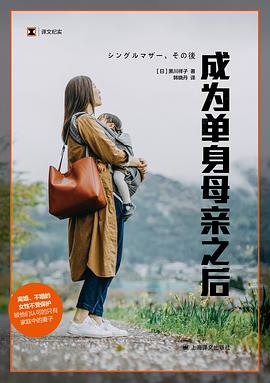
After becoming a single mother
After becoming a single mother
[Japanese] Kurokawa Shoko Han Xiaodan 译
Regular price
$14.99 USD
Regular price
Sale price
$14.99 USD
Unit price
/
per
Low stock
Couldn't load pickup availability
ISBN
ISBN
9787532796960
share

书籍简介
Divorced and unmarried women are unprotected.
Only wives within a family are recognized by them.
————
Female poverty is a structural problem.
In 1985, Japan enacted the Equal Employment Opportunity Law, a law intended to achieve gender equality, but which wove female poverty into a rigid structure.
On the one hand, it championed equal employment opportunities for men and women, while on the other hand, it divided family responsibilities, reinforced gender division of labor, expanded non-regular employment, granted economic advantages to wives, and reduced subsidies for single-parent households.
Ostensibly social policies that favored women, they actually divided women into those who were wives and those who were not.
Japanese policy did not leave room for "women who do not rely on men for support" to survive, and this is the root cause of poverty among single mothers and single women.
For women, 1985 was precisely the "first year of poverty."
【Editor's Recommendation】
"After Becoming a Single Mother" revolves around the plight of single mothers, but the deeper reasons it reveals for their predicament concern all unmarried, married, and divorced women.
In 1985, pressured by international circumstances and in response to the UN Convention on the Elimination of All Forms of Discrimination Against Women, Japan enacted the Equal Employment Opportunity Law. In the same year, before achieving gender equality in the workplace, the Japanese government preemptively created a national pension system that favored full-time housewives. Subsequently, a series of policies tilted towards married and widowed women were successively introduced.
Wives and widows received preferential treatment in policy, while divorced and unmarried single women were not protected by policy, and invisible pressure led to discrimination against single women and a disguised form of "urging marriage."
The "standard family" consisting of "a husband as the breadwinner + a full-time housewife + two children" is no longer the only choice for women. However, policies based on this traditional family model still profoundly affect the current living conditions of Japanese women.
"Male dominance is the root cause of the lack of women's rights." The power to formulate policies is in the hands of men, and it is most beneficial for men when women enter the family and become "virtuous helpers." Going a step further, the "favor" that women as wives receive from society comes at the cost of their independence and autonomy.
Unreasonable policies have divided women, but in reality, all women are victims of these male-dominated policies.
Only wives within a family are recognized by them.
————
Female poverty is a structural problem.
In 1985, Japan enacted the Equal Employment Opportunity Law, a law intended to achieve gender equality, but which wove female poverty into a rigid structure.
On the one hand, it championed equal employment opportunities for men and women, while on the other hand, it divided family responsibilities, reinforced gender division of labor, expanded non-regular employment, granted economic advantages to wives, and reduced subsidies for single-parent households.
Ostensibly social policies that favored women, they actually divided women into those who were wives and those who were not.
Japanese policy did not leave room for "women who do not rely on men for support" to survive, and this is the root cause of poverty among single mothers and single women.
For women, 1985 was precisely the "first year of poverty."
【Editor's Recommendation】
"After Becoming a Single Mother" revolves around the plight of single mothers, but the deeper reasons it reveals for their predicament concern all unmarried, married, and divorced women.
In 1985, pressured by international circumstances and in response to the UN Convention on the Elimination of All Forms of Discrimination Against Women, Japan enacted the Equal Employment Opportunity Law. In the same year, before achieving gender equality in the workplace, the Japanese government preemptively created a national pension system that favored full-time housewives. Subsequently, a series of policies tilted towards married and widowed women were successively introduced.
Wives and widows received preferential treatment in policy, while divorced and unmarried single women were not protected by policy, and invisible pressure led to discrimination against single women and a disguised form of "urging marriage."
The "standard family" consisting of "a husband as the breadwinner + a full-time housewife + two children" is no longer the only choice for women. However, policies based on this traditional family model still profoundly affect the current living conditions of Japanese women.
"Male dominance is the root cause of the lack of women's rights." The power to formulate policies is in the hands of men, and it is most beneficial for men when women enter the family and become "virtuous helpers." Going a step further, the "favor" that women as wives receive from society comes at the cost of their independence and autonomy.
Unreasonable policies have divided women, but in reality, all women are victims of these male-dominated policies.
出版日期/Publication Date:
出版社/Publisher:上海译文出版社
出品方/Imprint:
页数/Page: 200