
1
/
of
1
Vegetables in China
Vegetables in China
Zhang Pingzhen
Regular price
$31.99 USD
Regular price
Sale price
$31.99 USD
Unit price
/
per
Out of stock
Couldn't load pickup availability
ISBN
ISBN
9787559659040
share
书籍简介
A detailed, practical, and fascinating illustrated encyclopedia of vegetables
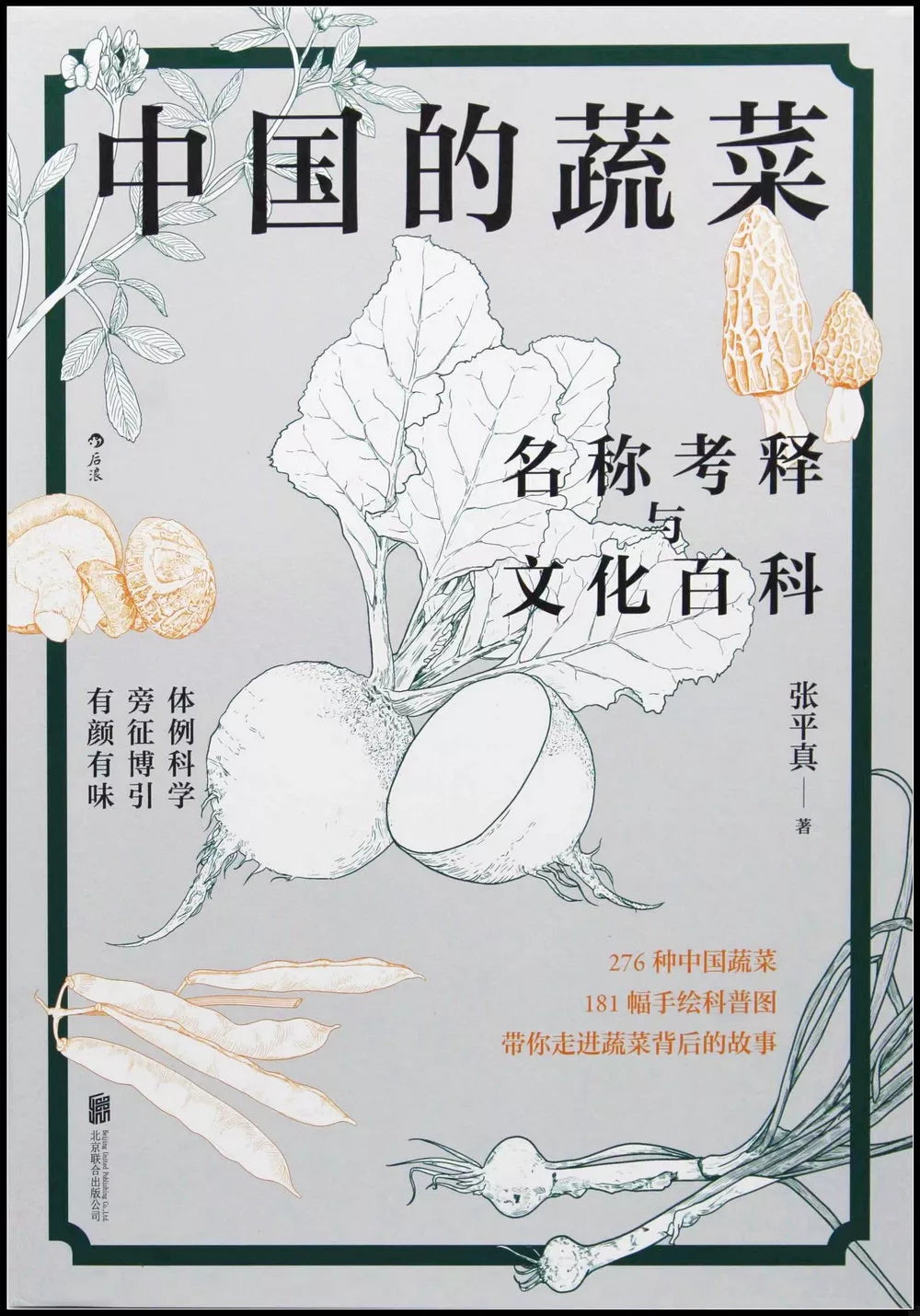
Comprehensive collection of 276 Chinese vegetables, with 181 meticulously hand-drawn vegetable science popularization illustrations
Popularizing vegetable knowledge, telling interesting vegetable stories, interpreting vegetable culture, and exploring the origins of vegetables
Scientific format, extensive citations, aesthetically pleasing and flavorful
▎ Content Introduction
Food is the paramount need of the people, and fine meals begin with vegetables. Vegetables are the most enduring companions on Chinese dinner tables. China has a long history of vegetable cultivation and a wide variety of vegetables. Over thousands of years of development, a rich and brilliant vegetable culture has gradually formed, and together with wine culture and tea culture, it has become an important part of Chinese food culture. This book takes the interpretation of vegetable names as its starting point, elaborating on more than 270 types of Chinese vegetables, accompanied by exquisite hand-drawn popular science illustrations. The book is divided into "Overview" and "Specifics." The "Overview" outlines the composition of Chinese vegetable names, their origins, and word-formation methods. The "Specifics" categorizes and meticulously examines each vegetable's classification, origin, introduction time, cultivation history, current supply status, name origin, naming factors, nutritional components, and consumption methods. This book offers a unique perspective, clear organization, and an accessible writing style, making it highly readable. It is suitable for general readers seeking to enrich their knowledge through casual reading, for family collections to facilitate daily life, and even more so for students of vegetables, horticulture, and botany as an introductory text for related disciplines.
▎ Editor's Recommendation
◎Extensive collection, detailed content, a complete guide to vegetable culture
This book is written by Mr. Zhang Pingzhen, a senior vegetable researcher with decades of experience in vegetables and non-staple foods. It systematically explains 276 types of Chinese vegetables, divided into 18 major categories, mentioning over 5,000 different vegetable names, basically covering the main existing vegetables and their appellations in China. The book provides a comprehensive and detailed scientific popularization and cultural interpretation of Chinese vegetables' classification, origin, cultivation history, name origin, word-formation methods, as well as consumption guidelines and health knowledge. Appendices include "Comprehensive List of Correct Names and Aliases of Chinese Vegetables," "Comprehensive List of Latin Scientific Names of Vegetables," etc., making it a true "complete guide to vegetable culture."
◎Extensive citations, detailed textual research, interesting vegetable stories within
This book is a collection of fascinating vegetable anecdotes and stories. The author extensively consults historical materials, cites widely, meticulously researches, and uncovers small stories about vegetables. Where is the hometown of spinach? Where does the alias "jade board" for bamboo shoots come from? Which vegetable did Su Wu actually consume when he was hungry while herding sheep? Which Qing Dynasty emperor loved cabbage so much that he wrote poetry about it? How did mushroom rings form on the Mongolian grasslands during the Ming and Qing dynasties? How is wormwood, which grows "when the fugu are about to ascend," best cooked? All these untold vegetable stories are within.
◎Accessible and easy to understand, thoroughly explaining vegetable knowledge
The author's writing is plain and unadorned, the narrative is clear and logical, the explanations are accessible, the language is concise, and the content is engaging and interesting, possessing both knowledge and practicality. It is suitable for general readers seeking to enrich their knowledge through casual reading, for family collections to facilitate daily life, and even more so for students of vegetables, horticulture, and botany as an introductory text for related disciplines. A major feature of this book is its balance between entertainment and academic rigor, fully meeting the diverse reading needs of readers.
◎Original hand-drawn illustrations, rich in visuals and text, a grand panorama of vegetables at a glance
The book features meticulously hand-drawn original line-art popular science illustrations of vegetables by an experienced illustrator. The accurate depiction, clear details, and easy identification, combined with the rich visuals and text, stimulate readers' interest, allowing them to intuitively appreciate the beauty and fun of vegetable forms, and opening up new frontiers in vegetable and horticultural knowledge. The book is paperback with Smythe-sewn binding, making it easy to lay flat for reading. Specially designed beautiful full-color endpapers with a vegetable theme are included at the beginning and end of the book, with three versions sent randomly, offering full of surprises.
Comprehensive collection of 276 Chinese vegetables, with 181 meticulously hand-drawn vegetable science popularization illustrations
Popularizing vegetable knowledge, telling interesting vegetable stories, interpreting vegetable culture, and exploring the origins of vegetables
Scientific format, extensive citations, aesthetically pleasing and flavorful
▎ Content Introduction
Food is the paramount need of the people, and fine meals begin with vegetables. Vegetables are the most enduring companions on Chinese dinner tables. China has a long history of vegetable cultivation and a wide variety of vegetables. Over thousands of years of development, a rich and brilliant vegetable culture has gradually formed, and together with wine culture and tea culture, it has become an important part of Chinese food culture. This book takes the interpretation of vegetable names as its starting point, elaborating on more than 270 types of Chinese vegetables, accompanied by exquisite hand-drawn popular science illustrations. The book is divided into "Overview" and "Specifics." The "Overview" outlines the composition of Chinese vegetable names, their origins, and word-formation methods. The "Specifics" categorizes and meticulously examines each vegetable's classification, origin, introduction time, cultivation history, current supply status, name origin, naming factors, nutritional components, and consumption methods. This book offers a unique perspective, clear organization, and an accessible writing style, making it highly readable. It is suitable for general readers seeking to enrich their knowledge through casual reading, for family collections to facilitate daily life, and even more so for students of vegetables, horticulture, and botany as an introductory text for related disciplines.
▎ Editor's Recommendation
◎Extensive collection, detailed content, a complete guide to vegetable culture
This book is written by Mr. Zhang Pingzhen, a senior vegetable researcher with decades of experience in vegetables and non-staple foods. It systematically explains 276 types of Chinese vegetables, divided into 18 major categories, mentioning over 5,000 different vegetable names, basically covering the main existing vegetables and their appellations in China. The book provides a comprehensive and detailed scientific popularization and cultural interpretation of Chinese vegetables' classification, origin, cultivation history, name origin, word-formation methods, as well as consumption guidelines and health knowledge. Appendices include "Comprehensive List of Correct Names and Aliases of Chinese Vegetables," "Comprehensive List of Latin Scientific Names of Vegetables," etc., making it a true "complete guide to vegetable culture."
◎Extensive citations, detailed textual research, interesting vegetable stories within
This book is a collection of fascinating vegetable anecdotes and stories. The author extensively consults historical materials, cites widely, meticulously researches, and uncovers small stories about vegetables. Where is the hometown of spinach? Where does the alias "jade board" for bamboo shoots come from? Which vegetable did Su Wu actually consume when he was hungry while herding sheep? Which Qing Dynasty emperor loved cabbage so much that he wrote poetry about it? How did mushroom rings form on the Mongolian grasslands during the Ming and Qing dynasties? How is wormwood, which grows "when the fugu are about to ascend," best cooked? All these untold vegetable stories are within.
◎Accessible and easy to understand, thoroughly explaining vegetable knowledge
The author's writing is plain and unadorned, the narrative is clear and logical, the explanations are accessible, the language is concise, and the content is engaging and interesting, possessing both knowledge and practicality. It is suitable for general readers seeking to enrich their knowledge through casual reading, for family collections to facilitate daily life, and even more so for students of vegetables, horticulture, and botany as an introductory text for related disciplines. A major feature of this book is its balance between entertainment and academic rigor, fully meeting the diverse reading needs of readers.
◎Original hand-drawn illustrations, rich in visuals and text, a grand panorama of vegetables at a glance
The book features meticulously hand-drawn original line-art popular science illustrations of vegetables by an experienced illustrator. The accurate depiction, clear details, and easy identification, combined with the rich visuals and text, stimulate readers' interest, allowing them to intuitively appreciate the beauty and fun of vegetable forms, and opening up new frontiers in vegetable and horticultural knowledge. The book is paperback with Smythe-sewn binding, making it easy to lay flat for reading. Specially designed beautiful full-color endpapers with a vegetable theme are included at the beginning and end of the book, with three versions sent randomly, offering full of surprises.
出版日期/Publication Date:
出版社/Publisher:北京联合出版公司
出品方/Imprint:the new wave
页数/Page: 472