
A Wander Through Taiwan (Taiwan Man You Lu) - Winner of the 2026 Booker Prize
A Wander Through Taiwan (Taiwan Man You Lu) - Winner of the 2026 Booker Prize
Yang Shuangzi
In stock
Couldn't load pickup availability
ISBN
ISBN
share
书籍简介
Taiwan's First Literary Work
Winner of the 2026 Booker Prize
Winner of the 2024 National Book Award for Translated Literature
Winner of the 2024 Japan Translation Award
Winner of the 2021 Taiwan Golden Tripod Award for Literature
Showa Taiwan Trans-Island Railway Gourmet Journey
Yang Shuang-tzu's "Taiwan Roaming Record" Makes a Grand Debut
"Let's eat our way across Taiwan together!" — Chizuru Aoyama (Japanese novelist from Kyushu)
"In this world, there is no hotter potato more difficult to refuse than well-meaning presumptuousness." — Aisabu Mishima (Employee of the Taichung City Office, Taiwan Governor-General's Office)
"I'll only say this once, listen carefully. I don't cook for Japanese people." — Master A-Pen (Legendary female head chef from Zhangzhou)
"The war between the Empire and China has evolved to this point—oh, perhaps in the future Taiwan, there will be no need for translators." — Qianhe Wang (Teacher of the National Language Department at the Public School)
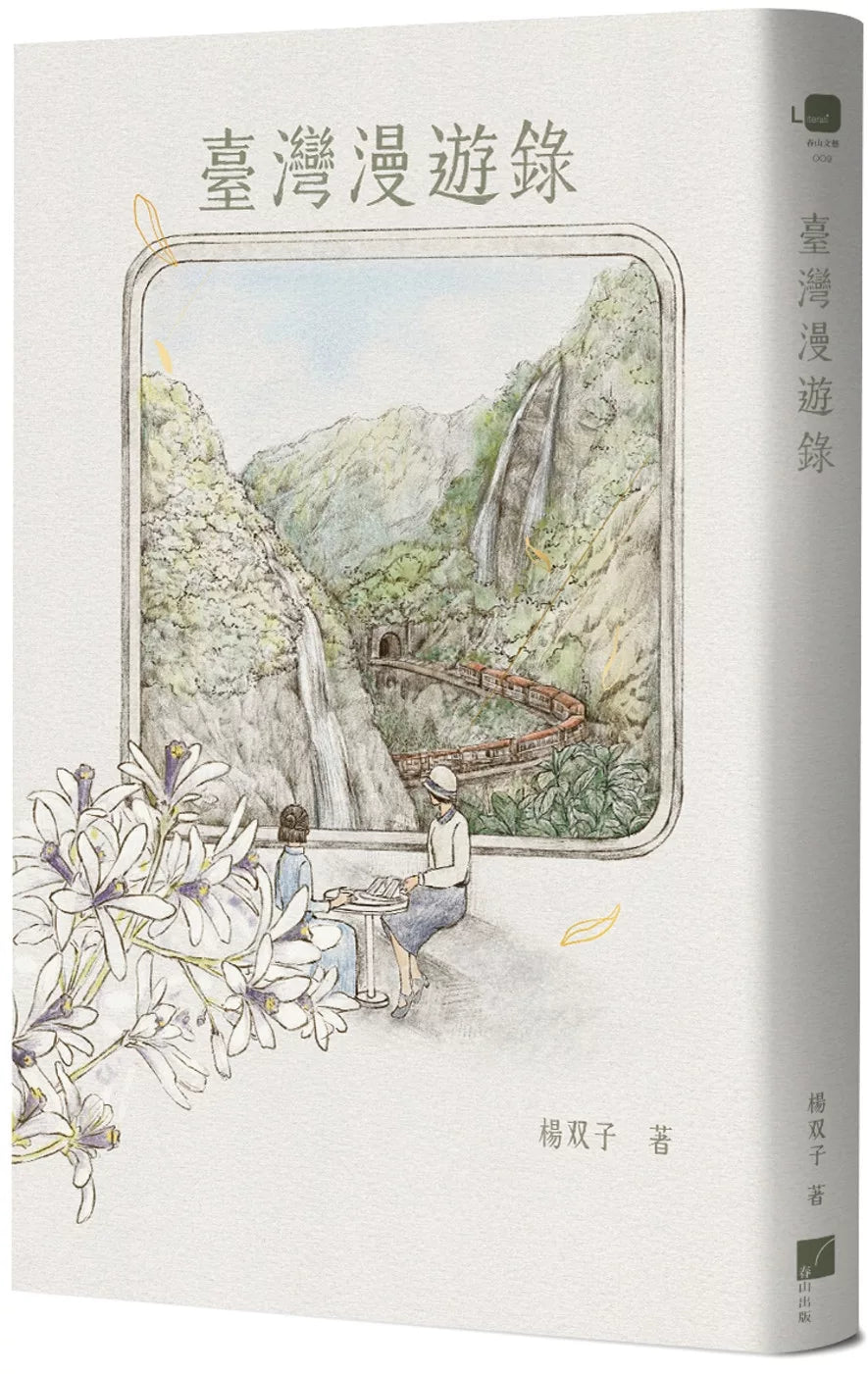
From melon seeds, "mee-sai-mok," and "ma-yi" soup, to sashimi, sukiyaki, and then salted cake and honey-bean ice, the novel is like a feast, weaving Chizuru Aoyama's year in Taiwan—her spring, summer, autumn, and winter—into this banquet. There are Taiwanese snacks, grand Japanese dishes, and even dishes of diverse heritage, such as curry, whose flavor shifts upon entering the country. In the dishes served one after another, this novelist-chef subtly adds a few flavors, those indescribable tastes that are like the alienation of tongues due to individuals carrying different life cultures.
In the 13th year of Showa (1938), Chizuru Aoyama's semi-autobiographical novel "Records of Youth" was adapted into a film and screened in Taiwan. With the promotion of the women's group Nisshinkai, it received an enthusiastic response, and she was invited to Taiwan for a speaking tour. Chizuru Aoyama came from a wealthy family, but due to her mother's early death, she was sent to a branch family in Nagasaki for upbringing. During her stay in Taichung, Nisshinkai recommended Qianhe Wang, a daughter from a concubine of a prominent Taiwanese family, to serve as her interpreter. Growing up with entirely different cultural upbringings, the two had the opportunity to travel together along the cities of the longitudinal railway. They stayed at the Taipei Railway Hotel and the Tainan Railway Hotel, and even took sugar railways and local branch lines, enjoying the scenery of various towns. At each stop, street vendors, "dagashi" shops, traditional candy stores, tea houses, or Western restaurants, eateries, and hotels—they ate wherever they went. This gourmet journey along the longitudinal railway was truly a rare experience, a precious moment in time when two women met before marriage, embracing freedom. While satisfying their taste buds, they exchanged culture and ideas. Chizuru Aoyama then learned that Qianhe Wang, who had served as a teacher in a public school, harbored a wish to become a translator. Perhaps it was a resonance between women, as Chizuru Aoyama understood how difficult it was for women to have independent careers, especially since Qianhe Wang lacked a strong background and family support, which sparked her desire to lend a helping hand.
However, the harshness of war was gradually approaching... Would the two be able to achieve their desired destinies?
Novelist Yang Shuang-tzu, through solid historical research, intricate plot, and vivid character portrayal, uses food as a metaphor to allow us to glimpse the various contradictions in Japan's treatment of colonial Taiwan, the Japanese mainlanders versus the native Taiwanese, and even the differences in the destinies of men and women back then. It also reveals the various difficulties and challenges women face as independent individuals who desire independent professional identities and thoughts.
Acclaim
Luo Yi-chun (Novelist)
Chen Xue (Novelist)
Chen Yujin (Novelist)
Huang Chung-kai (Novelist)
Chang Wen-hsun (Associate Professor, Graduate Institute of Taiwan Literature, National Taiwan University)
Cheng Fang-ting (Associate Professor, Graduate Institute of Taiwan Literature, National Taiwan University)
Xiao Xiang-shen (Member of Taipei Local Anomaly Studio)
Foreword
Sagara Shinsaga (Literary Critic, Novelist, Anthropologist)
出版日期/Publication Date:
出版社/Publisher:春山出版
出品方/Imprint:
页数/Page: 368