
1
/
of
1
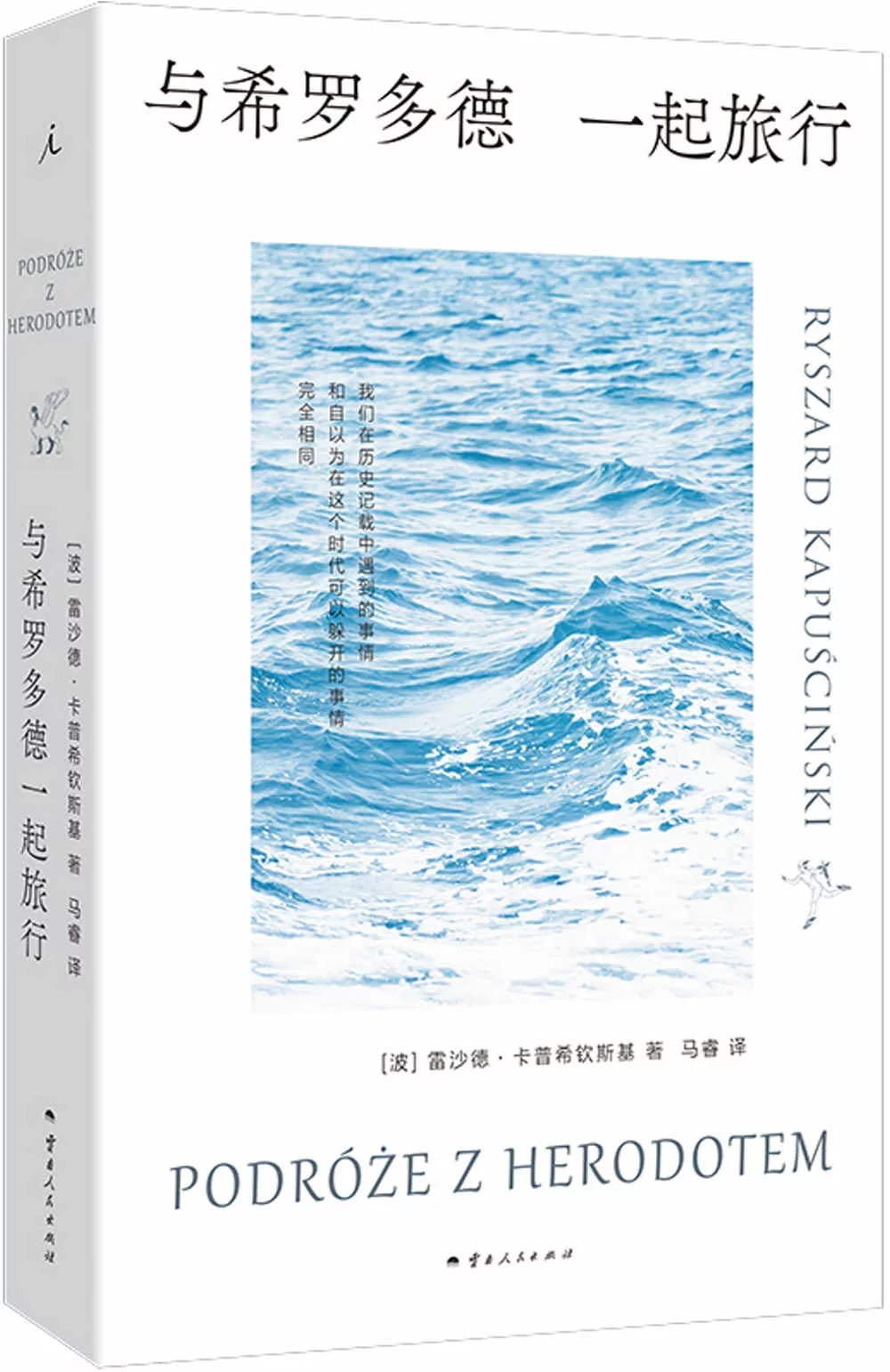
Traveling with Herodotus
Traveling with Herodotus
[Pol.] Ryszard Kapuscinski Rui Ma 译
Regular price
$22.99 USD
Regular price
Sale price
$22.99 USD
Unit price
/
per
Out of stock
Couldn't load pickup availability
ISBN
ISBN
9787222229266
share
书籍简介
⛵️ Highlights:
💡1. Six Nobel Prize nominations, a legendary journalist's forty-year tumultuous journey: Against the flow of people, into the heart of disaster—
Over forty years as a foreign correspondent, his footprints covered more than a hundred countries. Crossing fire lines, venturing deep into remote regions of Asia, Africa, and Latin America, he sent back firsthand reports from the scenes of major events.
He personally experienced twenty-seven revolutions and coups, was detained and imprisoned over forty times, and sentenced to death four times. He authored more than twenty non-fiction works, translated into over thirty languages, and won more than fifty national and international awards.
The "nail-tough" journalist of the century: "A true master" (Gabriel García Márquez); "A stunning fusion of journalism and literature" (Salman Rushdie); "The extraordinary magician of modern journalism" (John le Carré); "The most outstanding witness of our time... waves of refugees flow in one direction, fleeing disaster, while Kapuściński goes the other way, into the heart of disaster" (Margaret Atwood).
.
💡2. Breaking through the Iron Curtain: The whole world was his beat—
In 1956, aboard an old twin-engine propeller DC-3 plane that had served in the war and was patched up, Polish student, worker, and soldier, and novice journalist Kapuściński finally crossed the border, flying to Rome, beginning a forty-year journey of wandering the world.
In India, having grown up with a socialist education emphasizing equality, he found himself suddenly transformed into a "gentleman" riding in a rickshaw; in Afghanistan, he was detained for not having a visa, but couldn't be deported because the plane he arrived on had already left, and it was the only one. Thanks to the "Hundred Flowers Campaign" policy, he was able to come to China, where he had cordial conversations with colleagues from the "China Youth Daily," reading "Selected Works of Mao Zedong" and "Zhuangzi," but before he could even start reporting, his newspaper team in Poland disbanded...
The 1960s saw frequent coups in Africa. In Nasser's Egypt, the vagrants serving the regime were like "idle magma," even more effective than maintaining an expensive full-time police force. In Congo, where the colonial system collapsed and civil war broke out, everyone became a refugee, and missionaries directed children in military drills...
In 1979, he witnessed the final weeks of the Shah's rule in Tehran: a world of demonstrators, shouted slogans, crackling gunfire, and the stench of gas, yet after the snipers withdrew, second-hand booksellers appeared on the streets. And not far away, in Persepolis, stood the ruins of Darius's palace and Xerxes' harem...
.
💡3. Carrying Herodotus through the fires of war: Truth lies deep in history—
Throughout his forty-year global journey crossing fire lines, Kapuściński always carried Herodotus's "Histories" with him. This historical work, written two thousand five hundred years ago, was banned from printing in Poland until after Stalin's death.
But what could be wrong with Herodotus? His ancient Greece was "a bright paradise where blood flowed every few years." He wrote about fledgling tyrants learning how to maintain power, recorded the demise of Cyrus the Great, the brutality and defeat of Darius the conqueror, the massacre within besieged Babylon, the destruction of Athens, the sinking of the Persian fleet... and the resistors who survived amidst the eruptions of historical lava, people who were "infinitely small" yet wanted to stand against such destructive power.
The twentieth century that Kapuściński sought to document—power, war, disaster, displacement, and the miraculously preserved daily life within the cracks of history—miraculously intersected with Herodotus's world. To a Pole who broke through the Iron Curtain, examples of mutual resonance piled up. "Are the great achievements of history truly made by human weakness and evil?" "Why do people wage war against each other? Why do these two worlds fight each other to the death? Has it always been this way? Will it always be?"
Two chroniclers of their respective eras, crossing East and West, searched for pieces of true stories in incredible places. "Why was he fearless, able to tirelessly dedicate himself to this great adventure? I believe it was an optimistic conviction: believing that this world can be truly described, and believing that doing so is worthwhile."
.
💡4. The lens focused on the present, each scene also "History"—
Kapuściński proved with every page he wrote: there are many worlds, each different, each important. History is not just a record of human actions that have served their purpose and been discarded; history is a continuous present. "What we encounter in historical records is exactly the same as what we think we can avoid in this era." To understand others is to understand oneself.
.
💡5. Classic out of print for years, new re-translation available: "We are in darkness, surrounded by light"—
Margaret Atwood's special recommendation:
Like Herodotus, he listened and recorded, but never condemned. His life was about exploration—exploration, not the completion of any mission. What did he want to find? Of course, exotic details; cultural differences; the rich mosaic that was desperately lacking in post-war Poland. But beyond that, he sought common human goodness, even amidst extreme bloodshed, sadistic revenge, and degradation. Where is our hope? Perhaps in dignity—that simple dignity that is an eyesore to oppressors everywhere, yet can never be completely eradicated. That dignity that says "no."
Considering all he witnessed, Kapuściński had more reason than any writer to be pessimistic, but pessimism was not his usual expression. More often, he expressed wonder. Wonder that such brilliance and baseness could coexist in the world. At the end of "Travels with Herodotus," there is a sentence. It describes only a scene in a Turkish museum, but for this humble man, this outstanding witness of our time, it has the flavor of an epitaph:
"We are in darkness, surrounded by light."
.
⛵️ Reviews:
"The most outstanding witness of our time... Although Kapuściński's creative background was diverse and his material varied, his fundamental theme remained consistent: fear and oppression, and how people cope with or transcend fear and oppression; adversity and how it distorts or ennobles people; the suffocating, prolonged torment of monolithic politics, and humanity's eternal yearning to possess its own soul." —Margaret Atwood
"An openness to the world and to others, a keen perception of problems and empathy, combined with extraordinary integrative abilities and insights supported by profound knowledge—these are the characteristics of Ryszard Kapuściński... not only skilled at describing facts, but also able to discern broader phenomena and mechanisms within them." —Polish Press Agency
.
⛵️ Synopsis:
In 1956, twenty-four-year-old Kapuściński became a journalist in socialist Poland. A year later, he was "unexpectedly" sent to India, his first stop in decades as a foreign correspondent. There he would discover his life's calling—to travel to remote, seldom-visited corners, and from there to understand and narrate the world's diversity, and to seek universal truths amidst disparate phenomena.
Throughout his forty-plus years of tumultuous global journeys amidst the smoke of war, Kapuściński's constant companion was a copy of Herodotus's "Histories." Two thousand five hundred years ago, this ancient Greek writer, hailed as the "Father of History," traveled the then-known world, describing the diversity of its tribes and nations, and recording their wars and peace.
Kapuściński regarded Herodotus as a great pioneer and mentor, believing him to be the world's first journalist and globalist. From China to Iran, from Nigeria to Congo, from Angola to Armenia, Herodotus taught this young journalist to discover stories in incredible places and to understand the increasingly globalized modern world he inhabited.
In this book, Kapuściński revisits his experiences of breaking through the Iron Curtain and venturing into the world, recounting his awakening to foreign lands and others. This book is a memoir of two fearless travelers crossing time and space, traversing the world, and also an extraordinary chronicle connecting East and West: the global undercurrents that shaped nearly a hundred years of human history, personally experienced and recorded by the author, are still surging today.
💡1. Six Nobel Prize nominations, a legendary journalist's forty-year tumultuous journey: Against the flow of people, into the heart of disaster—
Over forty years as a foreign correspondent, his footprints covered more than a hundred countries. Crossing fire lines, venturing deep into remote regions of Asia, Africa, and Latin America, he sent back firsthand reports from the scenes of major events.
He personally experienced twenty-seven revolutions and coups, was detained and imprisoned over forty times, and sentenced to death four times. He authored more than twenty non-fiction works, translated into over thirty languages, and won more than fifty national and international awards.
The "nail-tough" journalist of the century: "A true master" (Gabriel García Márquez); "A stunning fusion of journalism and literature" (Salman Rushdie); "The extraordinary magician of modern journalism" (John le Carré); "The most outstanding witness of our time... waves of refugees flow in one direction, fleeing disaster, while Kapuściński goes the other way, into the heart of disaster" (Margaret Atwood).
.
💡2. Breaking through the Iron Curtain: The whole world was his beat—
In 1956, aboard an old twin-engine propeller DC-3 plane that had served in the war and was patched up, Polish student, worker, and soldier, and novice journalist Kapuściński finally crossed the border, flying to Rome, beginning a forty-year journey of wandering the world.
In India, having grown up with a socialist education emphasizing equality, he found himself suddenly transformed into a "gentleman" riding in a rickshaw; in Afghanistan, he was detained for not having a visa, but couldn't be deported because the plane he arrived on had already left, and it was the only one. Thanks to the "Hundred Flowers Campaign" policy, he was able to come to China, where he had cordial conversations with colleagues from the "China Youth Daily," reading "Selected Works of Mao Zedong" and "Zhuangzi," but before he could even start reporting, his newspaper team in Poland disbanded...
The 1960s saw frequent coups in Africa. In Nasser's Egypt, the vagrants serving the regime were like "idle magma," even more effective than maintaining an expensive full-time police force. In Congo, where the colonial system collapsed and civil war broke out, everyone became a refugee, and missionaries directed children in military drills...
In 1979, he witnessed the final weeks of the Shah's rule in Tehran: a world of demonstrators, shouted slogans, crackling gunfire, and the stench of gas, yet after the snipers withdrew, second-hand booksellers appeared on the streets. And not far away, in Persepolis, stood the ruins of Darius's palace and Xerxes' harem...
.
💡3. Carrying Herodotus through the fires of war: Truth lies deep in history—
Throughout his forty-year global journey crossing fire lines, Kapuściński always carried Herodotus's "Histories" with him. This historical work, written two thousand five hundred years ago, was banned from printing in Poland until after Stalin's death.
But what could be wrong with Herodotus? His ancient Greece was "a bright paradise where blood flowed every few years." He wrote about fledgling tyrants learning how to maintain power, recorded the demise of Cyrus the Great, the brutality and defeat of Darius the conqueror, the massacre within besieged Babylon, the destruction of Athens, the sinking of the Persian fleet... and the resistors who survived amidst the eruptions of historical lava, people who were "infinitely small" yet wanted to stand against such destructive power.
The twentieth century that Kapuściński sought to document—power, war, disaster, displacement, and the miraculously preserved daily life within the cracks of history—miraculously intersected with Herodotus's world. To a Pole who broke through the Iron Curtain, examples of mutual resonance piled up. "Are the great achievements of history truly made by human weakness and evil?" "Why do people wage war against each other? Why do these two worlds fight each other to the death? Has it always been this way? Will it always be?"
Two chroniclers of their respective eras, crossing East and West, searched for pieces of true stories in incredible places. "Why was he fearless, able to tirelessly dedicate himself to this great adventure? I believe it was an optimistic conviction: believing that this world can be truly described, and believing that doing so is worthwhile."
.
💡4. The lens focused on the present, each scene also "History"—
Kapuściński proved with every page he wrote: there are many worlds, each different, each important. History is not just a record of human actions that have served their purpose and been discarded; history is a continuous present. "What we encounter in historical records is exactly the same as what we think we can avoid in this era." To understand others is to understand oneself.
.
💡5. Classic out of print for years, new re-translation available: "We are in darkness, surrounded by light"—
Margaret Atwood's special recommendation:
Like Herodotus, he listened and recorded, but never condemned. His life was about exploration—exploration, not the completion of any mission. What did he want to find? Of course, exotic details; cultural differences; the rich mosaic that was desperately lacking in post-war Poland. But beyond that, he sought common human goodness, even amidst extreme bloodshed, sadistic revenge, and degradation. Where is our hope? Perhaps in dignity—that simple dignity that is an eyesore to oppressors everywhere, yet can never be completely eradicated. That dignity that says "no."
Considering all he witnessed, Kapuściński had more reason than any writer to be pessimistic, but pessimism was not his usual expression. More often, he expressed wonder. Wonder that such brilliance and baseness could coexist in the world. At the end of "Travels with Herodotus," there is a sentence. It describes only a scene in a Turkish museum, but for this humble man, this outstanding witness of our time, it has the flavor of an epitaph:
"We are in darkness, surrounded by light."
.
⛵️ Reviews:
"The most outstanding witness of our time... Although Kapuściński's creative background was diverse and his material varied, his fundamental theme remained consistent: fear and oppression, and how people cope with or transcend fear and oppression; adversity and how it distorts or ennobles people; the suffocating, prolonged torment of monolithic politics, and humanity's eternal yearning to possess its own soul." —Margaret Atwood
"An openness to the world and to others, a keen perception of problems and empathy, combined with extraordinary integrative abilities and insights supported by profound knowledge—these are the characteristics of Ryszard Kapuściński... not only skilled at describing facts, but also able to discern broader phenomena and mechanisms within them." —Polish Press Agency
.
⛵️ Synopsis:
In 1956, twenty-four-year-old Kapuściński became a journalist in socialist Poland. A year later, he was "unexpectedly" sent to India, his first stop in decades as a foreign correspondent. There he would discover his life's calling—to travel to remote, seldom-visited corners, and from there to understand and narrate the world's diversity, and to seek universal truths amidst disparate phenomena.
Throughout his forty-plus years of tumultuous global journeys amidst the smoke of war, Kapuściński's constant companion was a copy of Herodotus's "Histories." Two thousand five hundred years ago, this ancient Greek writer, hailed as the "Father of History," traveled the then-known world, describing the diversity of its tribes and nations, and recording their wars and peace.
Kapuściński regarded Herodotus as a great pioneer and mentor, believing him to be the world's first journalist and globalist. From China to Iran, from Nigeria to Congo, from Angola to Armenia, Herodotus taught this young journalist to discover stories in incredible places and to understand the increasingly globalized modern world he inhabited.
In this book, Kapuściński revisits his experiences of breaking through the Iron Curtain and venturing into the world, recounting his awakening to foreign lands and others. This book is a memoir of two fearless travelers crossing time and space, traversing the world, and also an extraordinary chronicle connecting East and West: the global undercurrents that shaped nearly a hundred years of human history, personally experienced and recorded by the author, are still surging today.
出版日期/Publication Date:
出版社/Publisher:云南人民出版社
出品方/Imprint:Ideal Country
页数/Page: 336